Trulend home repair loans for urgent fixes
Last updated:
People who search trulend for a burst pipe, dead water heater or roof leak can send one free request and see personal loans of $500–$5,000 from lenders in our network.
On this page

01
What a trulend home repair loan request covers
A trulend home repair request covers small, urgent fixes that keep a house safe and livable: plumbing leaks, water heaters, roof patches, electrical faults, heating or cooling breakdowns and similar repairs that cost $5,000 or less.
The money comes from an unsecured personal loan, so the lender pays you directly and your house is not pledged as collateral. You pay the plumber, roofer or electrician yourself, which means you can hire the contractor you trust instead of one tied to a financing program. Typical trulend requests we see range from a $650 garbage-disposal and supply-line swap to a $4,200 section of roof replaced after a storm.
Personal loans requested through a trulend search stay narrow on purpose. Kitchen remodels, additions, finished basements and other large projects belong to different products with longer terms, and they sit outside our $500–$5,000 range. If your list keeps growing, our guide to which home repairs can’t wait helps you separate the fixes that protect the structure today from upgrades that can be saved for later.
- Plumbing: leaking supply lines, failed shutoff valves, cracked drain pipes, sewer cleanouts
- Water heaters: tank or element replacement, thermostat failures, leaking relief valves
- Roofing: patching storm damage, replacing missing shingles, resealing flashing around chimneys
- Electrical: tripping breakers, scorched outlets, a failing panel, a broken service mast
- Heating and cooling: furnace igniters, blower motors, AC capacitors and refrigerant leaks
- Safety items: sump pumps, broken exterior steps, failed garage door springs
Common amounts for home repair loans
02
Typical costs of common home repairs
Most single home repairs that trulend searchers face land between $150 and $4,500, depending on the part, local labor rates and how much damage spread before the fix. The estimates below show where common jobs usually fall in the US.
| Repair | Typical estimated cost | What drives the price |
|---|---|---|
| Leaking pipe or supply line | $150–$800 | Access behind walls, pipe material, after-hours call fees |
| Tank water heater replacement (40–50 gal) | $1,200–$3,000 | Gas vs electric, venting changes, permit and haul-away |
| Tankless water heater swap | $2,500–$5,000 | Gas line upsizing, new venting, unit brand |
| Roof leak patch or flashing reseal | $350–$1,800 | Roof pitch, number of shingles, deck rot underneath |
| Partial roof section after storm | $1,500–$4,500 | Square footage, decking replacement, material match |
| Breaker or outlet replacement | $150–$450 | Number of circuits, aluminum wiring, code updates |
| Electrical panel replacement | $1,800–$4,500 | Amperage upgrade, utility disconnect, permit fees |
| Furnace repair (igniter, blower, board) | $200–$1,500 | Part cost, emergency rates, system age |
| Central AC repair (capacitor to compressor) | $150–$3,000 | Which part failed, refrigerant type, warranty status |
| Sump pump replacement | $600–$1,800 | Pump type, battery backup, discharge line work |
Water damage is the expensive multiplier. A drip under a sink that costs $200 to fix this week can cost $2,500 or more once it rots the cabinet floor and subfloor, which is why people often request personal loans quickly instead of waiting. For a closer look at plumbing quotes, see how much it costs to fix a leaking pipe, which breaks down copper, PEX and drain-line jobs.
All prices on this page are estimates gathered for planning only. Get at least two written quotes before you choose a loan amount for your trulend request.
03
How much trulend borrowers usually request for repairs
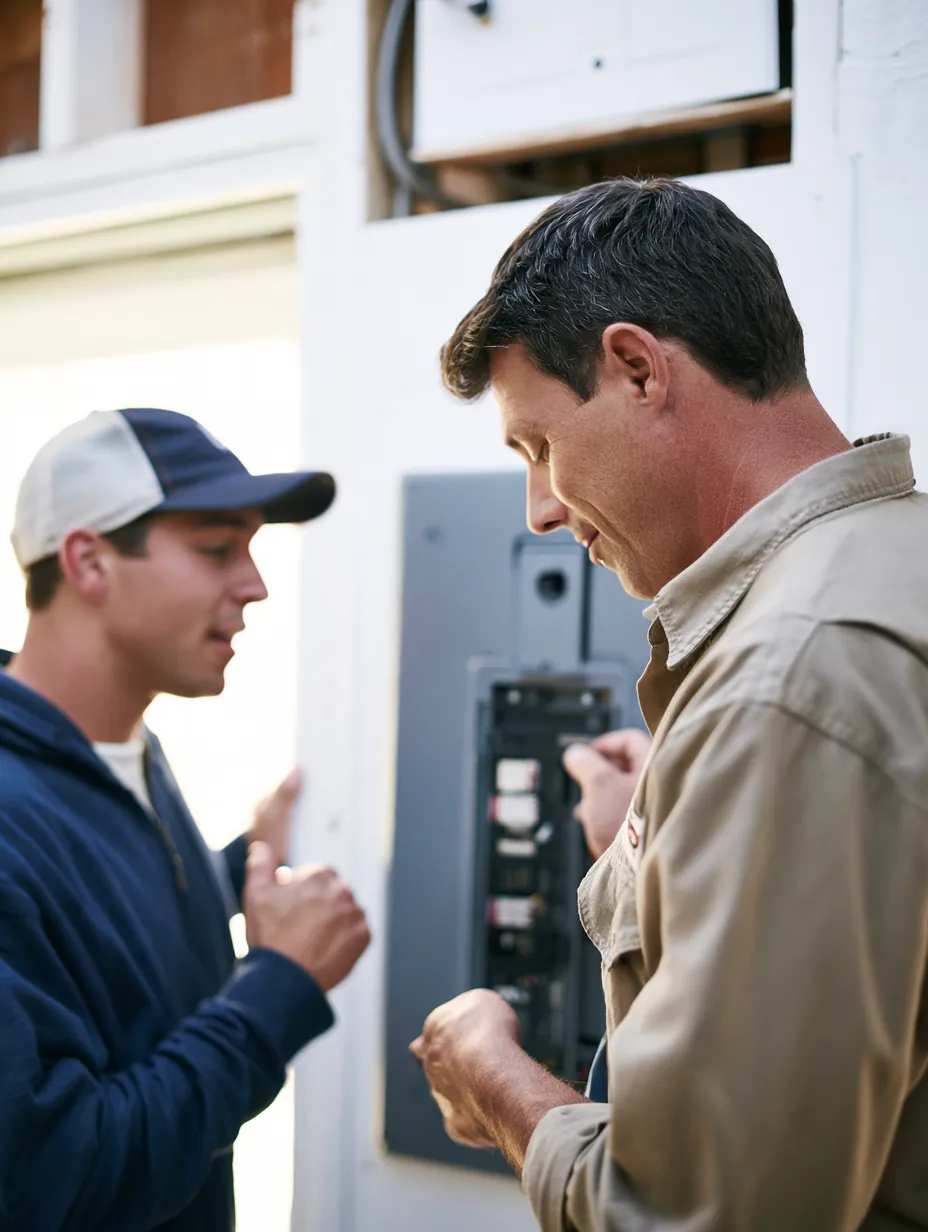
Trulend borrowers fixing a home most often request between $1,000 and $3,000, which matches one mid-size repair plus a cushion for surprises found once a wall, ceiling or crawlspace is opened.
Start from the written quote, not a guess. If a plumber quotes $1,850 to replace a water heater and the permit is another $120, a $2,000 personal loan covers the job with a little room. A $3,500 personal loan for the same repair adds interest on money you never needed. Ask the contractor what usually goes wrong on this type of job; roofers, for example, often find soft decking that adds $70–$100 per sheet.
Also check whether a lender deducts an origination fee. Some lenders behind trulending offers charge 0% to 10%, taken from the amount you receive. On a $2,000 loan with a 5% fee, you would see $1,900 in your account, so a $1,950 repair would come up short. When a fee applies, people sometimes request a slightly larger amount to cover it, then pay the extra back early if their lender allows prepayment without penalty.
- $500–$1,000: breaker or outlet work, a garbage disposal, a garage door spring, a small leak
- $1,000–$2,500: water heater replacement, furnace blower motor, sump pump with backup
- $2,500–$5,000: roof section after a storm, panel replacement, tankless water heater, sewer spot repair
04
What lenders review before making a home repair offer
Lenders reviewing a trulend repair request look mainly at your credit history, steady income, existing debt payments and identity details. Homeownership can help with some lenders, but a repair personal loan does not use your house as security.
Because these are unsecured personal loans, lenders making trulending offers do not order an appraisal or ask for a title search, and you will not see the closing costs common to home equity products. What they want to know is whether the monthly payment fits your budget. A household bringing in $4,200 a month with $900 in existing debt payments has more room for a $180 repair payment than one already paying $1,900 toward cards and a car.
Renters can send a trulend request too, for instance to replace a broken appliance they own or cover a deposit when a unit becomes unlivable, though most home repair requests come from owners. The full list of basic requirements, such as being 18 or older, a valid bank account and a US address, is on our eligibility page, along with how lenders weigh fair or limited credit for personal loans.
| Credit tier | Estimated APR range |
|---|---|
| Excellent (720+) | 7.99%–15.99% |
| Good (690–719) | 13.99%–21.99% |
| Fair (630–689) | 19.99%–29.99% |
| Poor (below 630) | 27.99%–35.99% |
05
How the trulend repair request works from form to funds
You fill out one free trulend request form, we pass it to lenders in our network, and any lender able to help shows its own offer. You choose whether to accept, and the lender handles approval and funding.
- Get a written repair quote so you know the amount, for example $2,300 for a roof patch and flashing reseal.
- Complete the request form with the amount, your income and basic contact details; it takes a few minutes.
- Review any trulending offers lenders show, including APR, term, monthly payment and any origination fee.
- If you accept, finish the lender’s own personal loan application and verification steps directly with that lender.
- Funds can arrive as soon as the next business day after approval, depending on the lender.
Timing matters with water and wiring. If a supply line bursts on a Thursday night, shut off the main valve, call a plumber for the emergency stop, and send your trulend request once you have the quote for the permanent fix. Many contractors accept a deposit by card and the balance on completion, so the loan often arrives before the final invoice does. Submitting the request is free and carries no obligation to accept any offer.
06
Comparing trulending offers for a repair
Compare trulend repair offers by total cost, not just the monthly payment. The APR, origination fee and term length together decide what one of these personal loans really costs by the final payment.
Here is the representative example we use across the site: a $2,000 personal loan over 12 months at 24% APR works out to an estimated $189.12 a month, $2,269.44 in total and $269.44 in interest, with no origination fee assumed. Stretch the same amount to 24 months and the payment drops to about $105.74, but total repayment climbs to roughly $2,537.76. Lower payments on personal loans feel easier during a stressful repair, yet they cost more overall.
| Term | Estimated monthly payment | Estimated total repaid |
|---|---|---|
| 12 months | $189.12 | $2,269.44 |
| 18 months | $133.40 | $2,401.20 |
| 24 months | $105.74 | $2,537.76 |
If two offers show the same APR but one deducts a 6% fee, the fee version leaves you $120 short on a $2,000 repair. Our rates and fees guide explains how APR already folds the fee into one number and why that makes it the fairest single figure for comparing trulending options side by side.
07
Alternatives to personal loans for home repairs
Before borrowing, check homeowners insurance, home warranty coverage, contractor payment plans, utility repair programs and a credit card with a low promotional rate. One of these may cost less than personal loans or trulending offers for your particular repair.
- Homeowners insurance: sudden damage such as a storm-torn roof or a burst pipe is often covered after your deductible, commonly $1,000–$2,500. Wear and slow leaks usually are not.
- Home warranty: a service plan may cover a failed water heater or furnace for a trade-call fee of roughly $75–$150, subject to the plan’s limits.
- Contractor financing: some installers offer plans, but compare the rate after any promotional window ends.
- Utility and local programs: some gas and electric utilities and city housing offices help with furnace or water heater replacement for qualifying households.
- Line of credit: useful when costs arrive in stages; read our comparison of a personal loan vs a line of credit for home repairs.
A personal loan tends to fit best when you have one defined repair, a firm quote and a wish for a fixed payment with a clear end date. People reading trulends reviews often mention that predictability: the payment does not change month to month, unlike a variable-rate card balance that can drift upward while the repair is still being paid down.
08
Repayment tips after a trulend repair loan
Set up autopay for the first due date, line it up with your pay schedule, and pay a little extra whenever your lender allows prepayment without a penalty, which shortens the loan and trims interest.
Plenty of trulend borrowers treat the repair loan like a temporary utility bill. If the payment is $166.76 on a $2,500 loan over 18 months at the sample rate, adding $25 a month can cut a couple of payments off the end. A tax refund or work bonus applied as a lump sum does even more. Confirm with your lender how extra payments are credited, toward principal or the next installment, before you send them.
Rebuild a small repair fund while you repay the personal loan. Setting aside $20 to $40 a week builds roughly $1,000 to $2,000 in a year, enough for the next garage door spring or furnace igniter without another trulend request. Homes need ongoing upkeep, and a common rule of thumb budgets about 1% of the home’s value each year for maintenance, so a $250,000 house might need around $2,500 a year in fixes.
09
Mistakes to avoid when financing a home repair
The costliest mistakes are borrowing before you have a written quote, paying a contractor in full up front, and choosing the longest personal loan term just to get the smallest payment without checking total cost.
- Paying 100% up front: a deposit of 10%–30% is common; the balance should follow completed work.
- Skipping permits: unpermitted electrical or water heater work can cause problems with insurance claims and resale.
- Hiring the first door-knocker after a storm: verify the roofer’s license and insurance with your state or county.
- Ignoring the fee: an origination fee on some trulending offers shrinks the deposit you receive, so plan the amount around it.
- Stacking applications: sending many separate applications can mean several hard credit inquiries, while one trulend request lets you compare offers first.
One more trap: using repair money for something else. If a $3,000 personal loan was meant for a roof section and $800 drifts toward a new television, the roof may still leak next spring and the payment remains. Keep the funds earmarked, pay the contractor directly, and save every receipt in case your insurer later reimburses part of the cost. Searches for trulends advice often start after a rushed decision, so a few minutes of planning up front pays off.
Home Repair Loans: common questions
Can a trulend repair request cover an emergency plumber’s after-hours call?
Yes, the loan can cover any part of a home repair bill, including emergency call-out fees that often run $150–$350 on nights and weekends. Because funding usually takes at least one business day after approval, most people pay the emergency visit by card or cash and use the personal loan for the larger permanent repair that follows, such as replacing the failed pipe or water heater.
Do I need to show the lender my contractor’s quote?
Most lenders in our network do not require a quote, because personal loans pay you directly rather than the contractor. Having one still helps you choose the right amount and term. A few lenders ask about loan purpose on their application, so listing home repair and the estimated cost keeps your answers consistent and accurate.
Is a home repair personal loan tax-deductible like mortgage interest?
Generally no. Interest on an unsecured personal loan used for routine repairs is usually treated as personal interest, which is not deductible, unlike some interest on loans secured by a home. Rules can differ for rental property or a business use of the home, so check with a tax professional about your situation before counting on any deduction.
What if the repair costs more than $5,000 once work starts?
Ask the contractor to split the job into phases and price the urgent part first, such as stopping the leak before replacing finished drywall. If the total still exceeds the $500–$5,000 range for trulend personal loans, insurance, contractor payment plans or savings may need to cover the rest. Avoid taking several overlapping loans to stretch past a sensible monthly payment.
Guides for this loan type
Explore other loan types & amounts
Ready to compare personal loan offers?
One free request, about five minutes, and no obligation to accept any offer.